A new Annenberg survey finds that Americans are divided on support for public water fluoridation, with MAHA supporters notably more skeptical.

A new Annenberg survey finds that Americans are divided on support for public water fluoridation, with MAHA supporters notably more skeptical.

Many Americans remain unclear about some specific maternal health recommendations, according to a new APPC survey.

Penn researchers led by PIK Professor Dolores Albarracín studied the persuasive impact of messages expressing attitudes, describing behaviors, or combining both.
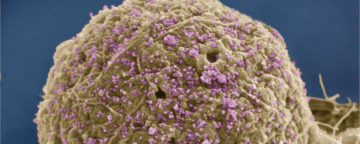
While most people are aware of how sexually transmitted infections (STIs) spread, there are gaps in knowledge about which can be prevented through vaccination.

The Center on Representative Government received APPC's 2026 Leonore Annenberg Institute for Civics Award to create civic education materials for youth.

A new APPC survey reveals broad pessimism about AI and a bipartisan belief that the government has done too little to regulate it.
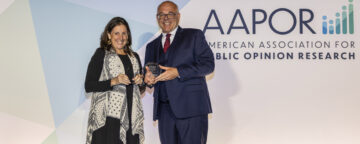
The policy center's ASAPH survey has won the American Association for Public Opinion Research’s 2026 Policy Impact Award.
FactCheck.org received a National Headliner Award in government and political beat reporting for a series on how Project 2025 was implemented across the U.S. government.

APPC survey finds that nearly 7 in 10 Americans trust vaccine scientists a moderate or greater amount to act in the best interests of “people like you."

The Association for Prevention Teaching and Research honored Kathleen Hall Jamieson for outstanding service in public health and educating the public about disease prevention.