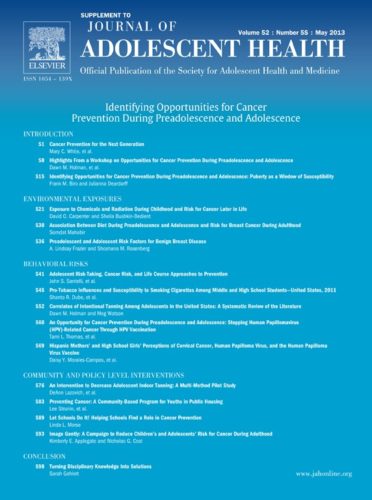
In a recently published paper in the Journal of Adolescent Health, a team led by Dan Romer studied the use of different screen media by a national panel of over 700 adolescents and young adults over a 1-year period. Despite research that lumps all screen media use together, the study found that heavy TV use
Health and Risk Communication

Research on the long-term effects of a media intervention on adolescent sexual behavior released in AJPH
Research conducted at APPC by Michael Hennessy, Ph.D., and Daniel Romer, Ph.D., among other project sites, was released in the January 2013 issue of the American Journal of Public Health. “Safer Sex Media Messages and Adolescent Sexual Behavior: 3-Year Follow-Up Results From Project iMPPACS” abstract: Objectives. We estimated the long-term (36-month) effects of Project iMPPACS, a
How smokers respond to pictorial cigarette warnings depends on how much control they think they have over their habit
Many are too addicted to even try to quit In newly released research with over 3,000 cigarette smokers, a team at the Annenberg Public Policy Center of the University of Pennsylvania and at the Psychology Department of the Ohio State University has found that the new pictorial warnings proposed by the FDA do make smokers

APPC study published in Communication Research
Research examining the effects of adolescent exposure to sexual content on television conducted by APPC scholars Jeffrey A. Gottfried, Ph.D., Sarah Vaala, Ph.D., Amy Bleakley, Ph.D., Michael Hennessy, Ph.D., and Amy Jordan, Ph.D., has been published in the journal Communication Research (February 2013). Article abstract: Using the Integrated Model of Behavioral Prediction, this study examines