
Overview
The Annenberg Center for Advanced Study of Communication, or ACASC, is an endowed center that aims to explore models of communication science through outreach and collaboration with APPC’s community of scholars as well as the larger Penn community. Under APPC research director Daniel Romer, the center supports postdoctoral fellows, faculty, and visiting fellows, and sponsors talks for the APPC community.
The center supports postdoctoral fellows in the Penn Center on Media, Technology, and Democracy as well as in APPC’s Climate Communication division, directed by Emily Falk, working in collaboration with Michael Mann, who directs the Penn Center for Science, Sustainability, and the Media.
ACASC, the Annenberg Health and Risk Communication Institute, and Penn Psychiatry coordinated the writing of the volume “Treating and Preventing Adolescent Mental Health Disorders,” first published in 2004. The third edition, published in 2025 by Oxford University Press, included Romer as co-editor and the chair of Penn Psychiatry, Maria Oquendo, as a lead collaborator. Another ACASC collaboration, with the Center for Injury Prevention and Research at Children’s Hospital of Philadelphia, headed by Flaura Winston, conducts an NIH-funded project to study interventions to reduce motor vehicle injuries among novice adolescent drivers.
Additional collaborations with APPC’s distinguished research fellows include working with Penn political science professor Julia Lynch to examine the public’s understanding of the welfare state as it is practiced in a capitalist economy such as the United States. Another, with Penn professor Lance Freeman of the Design and Sociology Departments, is conducting a survey of Philadelphia residents’ communication with neighbors and police regarding efforts to promote neighborhood safety and control gun violence.
The center conducts a competition for APPC’s current and former postdoctoral fellows and distinguished research fellows for small grants that can be leveraged to develop research programs in communication science.
People
-
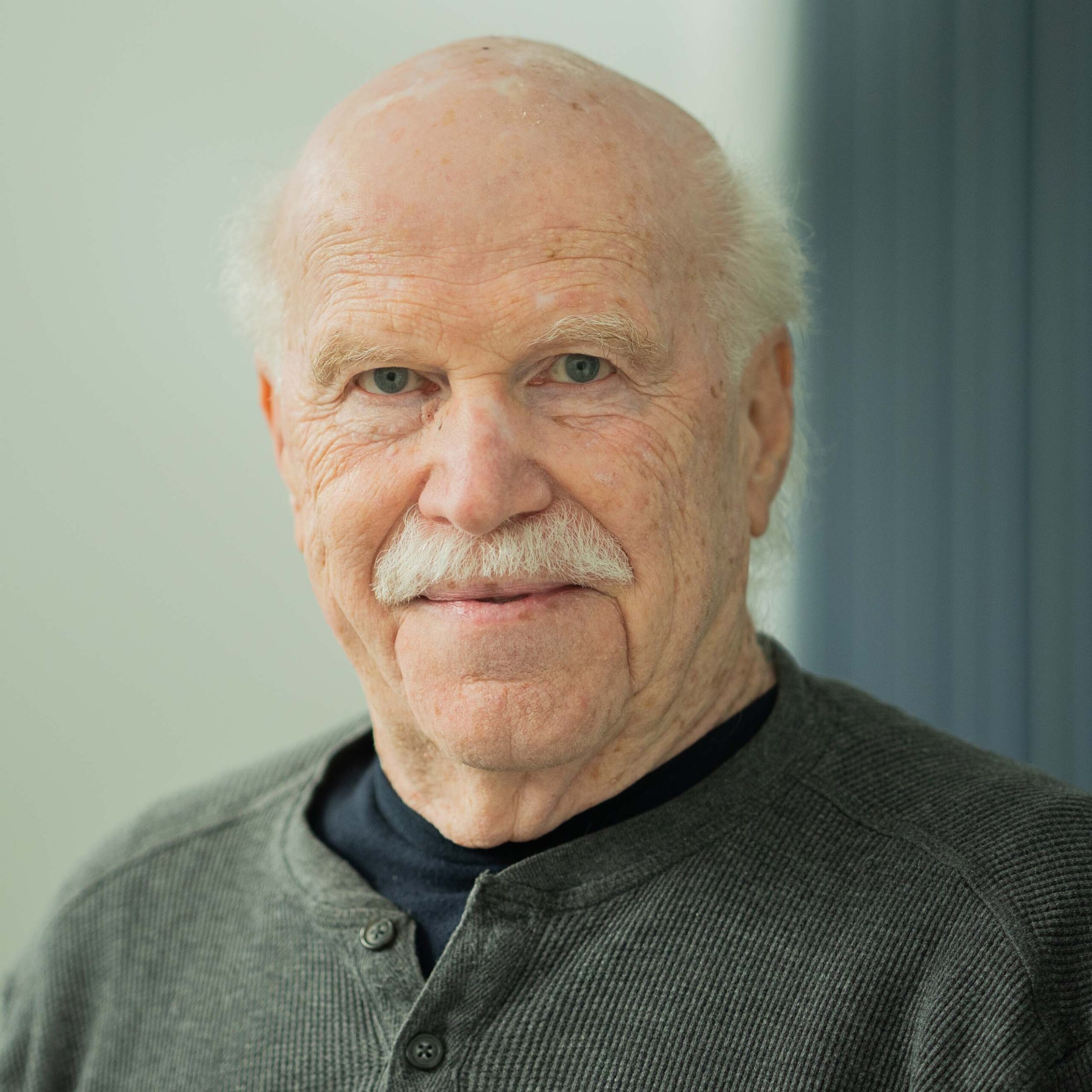
Dan Romer
Director
-

Yijing Chen
Postdoctoral Fellow
-

Ovidia Stanoi
Postdoctoral Fellow, Climate Communication
-

Lance Freeman
Distinguished Fellow
-

Julia Lynch
Distinguished Fellow
-

Flaura Koplin Winston
Distinguished Fellow
Publications
Adolescent Driver Training Program
Walshe, E. A., Romer, D., Elliott, M. R., Baxelbaum, K. S., Delgado, K., Ebert, J. P., & Winston, F. K. (2025). A contemporary examination of the effect of driver training for reducing crash risk in novice adolescent drivers: Protocol for the DRIVER study, a random assignment trial. Injury Epidemiology, doi: 10.1186/s40621-025-00645-2.
Walshe, E. A., Baxelbaum, K., McIntosh, C. W., Miller, L., Cheng, S., Wen, N., Winston, F. K., Romer, D. (2025). Addressing the gap: Examining the role of multiple executive function constructs and associated factors in risky driving performance in young drivers. Transportation Research Record. doi: 10.1177/03611981251338731
Walshe, E. A., Romer, D., Agaard, N., Winston, F. K. (2024). Variation in young driver training requirements by state. JAMA Network Open, 7(6), e3417551. 10.1001/jamanetworkopen.2024.17551.
Walshe EA, Elliott MR, Cheng S, et al. (2023). Driving Skills at Licensure and Time to First Crash. Pediatrics, 152(5): e2023060817. PMCID: PMC10598635. https://doi.org/10.1542/peds.2022-060817.
Walshe, E. A., Roberts, T. P. L., McIntosh, C. W., Winston, F. K., Romer, D., & Gaetz, W. (2023). An event-based magnetoencephalography study of simulated driving: Establishing a novel paradigm to probe the dynamic interplay of executive and motor function. Human Brain Mapping, 44, 2109-2121. PMCID: PMC9980886. doi: 10.1002/hbm.26197.
Adolescent Mental Health
Evans, D. L., Foa, E. B., Franklin, M. E., Gur, R. E., Kampman, K., Moutier, C. Y., Oquendo, M. A., Romer, D., Rynn, M. A., Seligman, M. E. P., Sysko, R., & Walsh, B. T. (Eds.). (2026). Treating and preventing adolescent mental health disorders: What we know and what we don’t know (3rd ed.). Oxford University Press. https://doi.org/10.1093/oso/9780197683705.001.0001
Climate Communication Program
Stanoi, O. A., Cosme, D., Jovanova, M., Kang, Y., Corbani, F., McGowan, A. L., Carreras-Tartak, J., Resnick, A., Bearman, P. S., Boyd, Z. M., Bassett, D. S., Lydon-Staley, D. M., Mucha, P. J., Falk, E. B., & Ochsner, K. N. (2026). Neural representations of popularity and leadership status relate to conformity in daily life. Proceedings of the National Academy of Sciences of the United States of America, 123(22), e2526584123. https://doi.org/10.1073/pnas.2526584123
Stanoi, O. A., Cosme, D., Jovanova, M., Kang, Y., Corbani, F., McGowan, A. L., Carreras-Tartak, J., Resnick, A., Bearman, P. S., Boyd, Z. M., Bassett, D. S., Lydon-Staley, D. M., Mucha, P. J., Falk, E. B., & Ochsner, K. N. (2026). Staying connected: How close friendships supported emotional well-being during the COVID-19 pandemic. Emotion, 26(6), 1361–1377. https://doi.org/10.1037/emo0001661
Supplementary Materials
Cultivation of Conspiratorial Mindsets Outside the Mainstream
Meirick, P. C., Busselle, R., Bilandzicc, H., Gross, L., Nabi, R., Potter, W. J., Romer, D., & Scharrer, E. (2026). Cumulative exposure: Scholarly responses to 50 years of cultivation research. Mass Communication and Society, 29(3), 365-382. doi: 10.1080/15205436.2026.2644823
Grants awarded
ACASC has awarded funding to help underwrite the following projects:
Motta, M. Stecula, D., & Landrum, A. 2023. Mitigating climate & health risks through strategic risk communication.
Lyons, B., & Hasell, A. 2023. Can increasing perceptions of public support for climate policy have lasting effects on personal support?
Atkin, H., Li, N., & Landrum, A. 2024. Public perceptions of the use of AI in attribution science and human caused extreme weather events.
Ellithorpe, M., & Manganello, J. 2024. Using AI to successfully reduce administrative burden for people with developmental disabilities and their families.
Vaala, S., Suldovsky, B., & Lapierre, M. 2024. The climate conscious generation: Examining the information environment and climate anxiety among US teens and young adults.
Nabi, R. & Sra, M. 2025. Encouraging fact checking of information provided by ChatGPT.
Rasheed, H. 2025. To correct or not to correct: Using AI to increase misinformation intervention accuracy.
Kenski, K. 2026. Linked fate and consumption of political information.
Wojcieszak, M. & Hoes, E. 2026. How short-form news shapes political knowledge and trust: Controlled experiment.
Sinclair, A. 2026. Identifying and correcting misinformation about climate change in the US and China.
Recent work
-
Annenberg Lecture Speaker Offers Hope for a Better Information Economy
In this year's Annenberg lecture, Columbia professor Tim Wu offered hope amid shuttered newspapers, rising misinformation, disruptive AI, and concentrated media ownership.

-
Fifty Years Later, Cultivation Theory Continues to Evolve
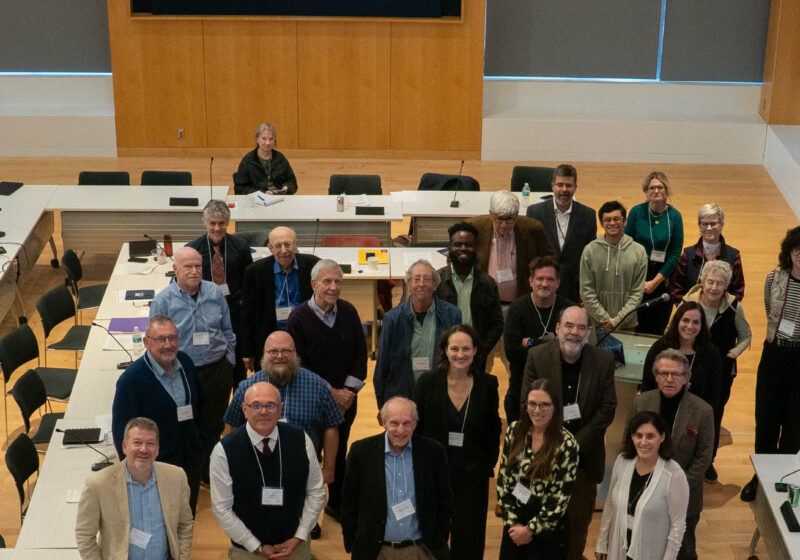
A daylong conference on cultivation theory sponsored by APPC and the Annenberg School for Communication brought scholars around the world together to revisit this foundational work.
-
Former APPC Postdoctoral Fellow published in the Journal of Family Issues
Former APPC Postdoctoral Fellow Cortney Evans, Ph.D., is the lead author of a forthcoming article, “Only Two Hours? A Qualitative Study of the Challenges Parents Perceive in Restricting Child Television Time,” which…
-
APPC Postdoctoral Fellow Presents Research Findings
Joelle Sano Gilmore, Ph.D., a postdoctoral fellow at APPC’s Annenberg Center for Advanced Study in Communication, presented research findings at the annual meeting of the Eastern Sociological Society in Philadelphia, PA on February 25, 2011. Dr. Gilmore discussed similarities between corporate underwriting spots during…
-
ACASC Fellows Spring Colloquium: Dr. Vikki Sara Katz
On Monday, February 22, APPC’s Annenberg Center for the Advanced Study in Communication (ACASC) held its Spring Youth and Media Colloquium, featuring Vikki Sara Katz, Ph.D., Assistant Professor of Communication at Rutgers University. Dr. Katz’s talk — “What…
-
Priya Nalkur published in Vulnerable Children and Youth Studies
An article by Priya G. Nalkur, Ph.D., a postdoctoral fellow at APPC’s Annenberg Center for Advanced Study in Communication, was published in the journal Vulnerable Children and Youth Studies (December 2009). Nalkur’s…
-
APPC Congratulates Postdoctoral Fellow Sally Dunlop
Sally Dunlop has been selected to receive the dissertation of the year award from the Health Communication division of the International Communication Association. Her dissertation is titled: Changing health behaviours: The roles…