The policy center's ASAPH survey has won the American Association for Public Opinion Research’s 2026 Policy Impact Award.
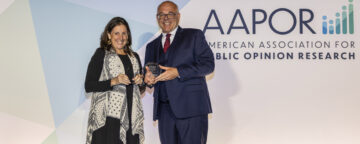
The policy center's ASAPH survey has won the American Association for Public Opinion Research’s 2026 Policy Impact Award.

APPC survey finds that nearly 7 in 10 Americans trust vaccine scientists a moderate or greater amount to act in the best interests of “people like you."

Awareness of the link between drinking alcohol and elevated cancer risk remains unchanged since February 2025, even though the alcohol-cancer connection has been omitted from the latest U.S. dietary guidelines.
When it comes to reliable health information, Americans are more confident in federal health agencies' career scientists than their leaders.
Although the public views Covid-19, Flu, and MMR vaccines as safe, a new APPC survey shows a statistically significant erosion in support.

With RSV cases up, an APPC survey finds most people likely to recommend RSV immunizations for infants, older adults, and during pregnancy.

The CDC has urged the use of shared decision-making between parents and health providers for some childhood vaccines, but many don't know what that is, Annenberg surveys show.
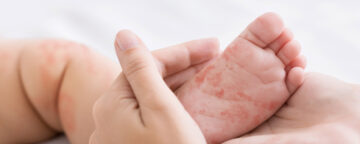
A new APPC survey finds a small but significant drop in public willingness to recommend the MMR vaccine to someone in their household.
A new APPC survey reveals a lack of knowledge among the public about what pertussis (whooping cough) is and what its symptoms are.

Most Americans would be likely to recommend the hepatitis B vaccine for a newborn, according to a new APPC survey.