While effective prevention and treatment for HIV exist, rates of HIV infections in the United States are still concerning, and public health officials are always looking for more effective ways to monitor and curtail the spread of the virus. A new tool, CyberGIS-HIV, created by researchers at the Social Action Lab at the University of Pennsylvania in collaboration with the University of Illinois at Urbana-Champaign, could help them achieve that goal.
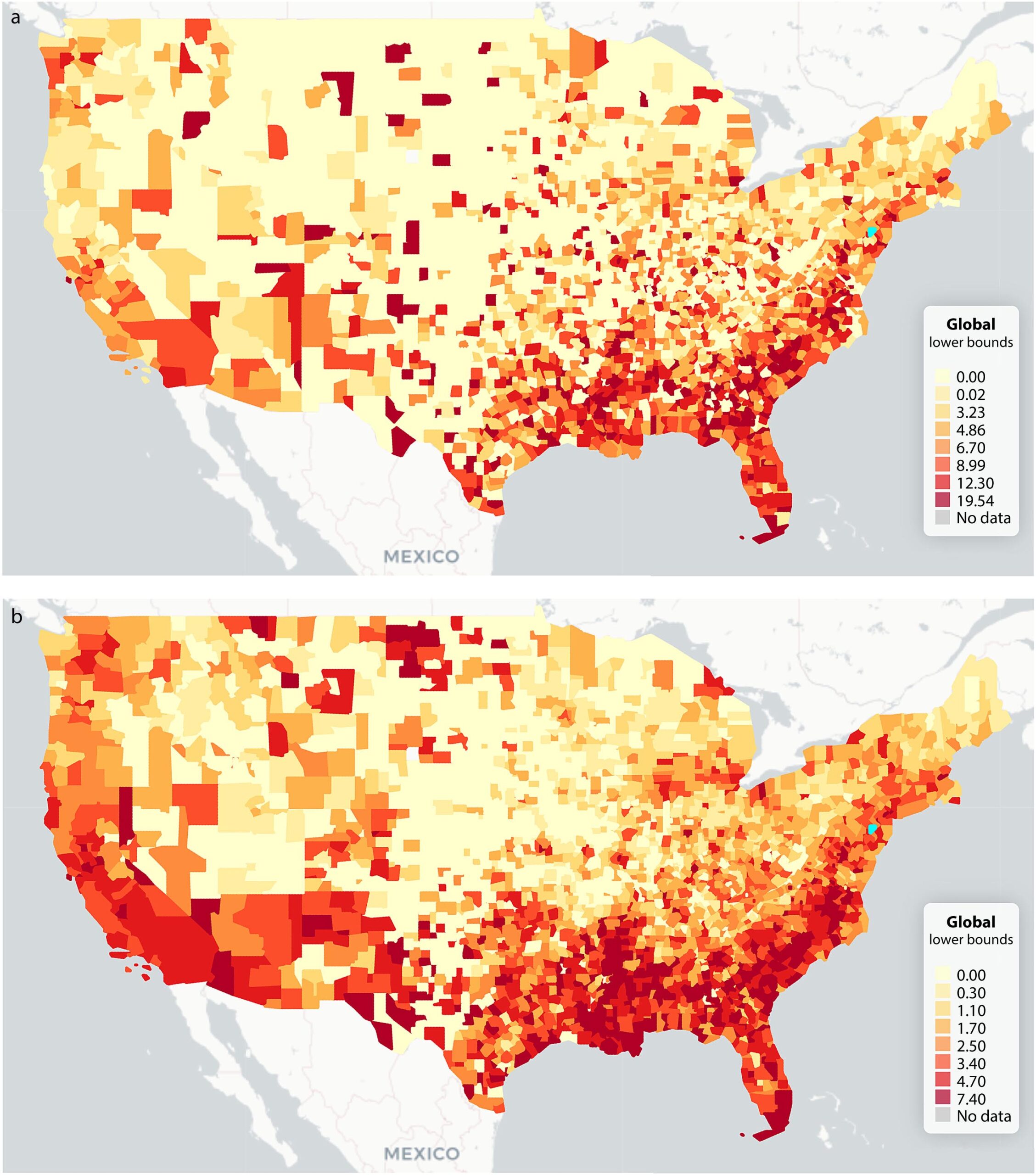
Annenberg School for Communication researchers Dolores Albarracín, the Amy Gutmann Penn Integrates Knowledge University Professor and director of the Social Action Lab and the Communication Science division of the Annenberg Public Policy Center; Sally Chan, Associate Research Professor; and Bita Fayaz-Farkhad, Assistant Research Professor, spent years developing methods to gauge accessibility to HIV testing, treatment, and prevention services. CyberGIS-HIV is a predictive modeling tool that allows users to view HIV data on an interactive map, compare different years side by side, and model future scenarios. For example, users can simulate how different policy actions, such as doubling community mental health centers, doubling linkage to HIV care, or reducing opioid prescriptions by 50%, might affect HIV rates through 2026. The goal is to provide health departments with a clearer picture of which policies to prioritize.
“The prevalence and incidence of HIV infections in the United States remain troubling and inequitable despite the availability of successful biomedical interventions,” Chan says. “Some of the challenges we face, like delays in surveillance data or limited access to prevention
and care, might have been avoided if officials had better forecasting tools that model specific policy actions, like increasing PrEP use. CyberGIS-HIV was designed to meet that need.”
In a recent article published in the American Journal of Public Health, the researchers asked over 40 state and federal public health officials to test CyberGIS-HIV against the forecasting methods they currently use. Participants rated the tool more highly for both ease of use and its potential to improve public health planning, the researchers found.
“Estimating HIV cases is critical for monitoring the spread of the virus, planning screening programs, and evaluating prevention efforts,” says Chan. “To date, however, existing methods involve spreadsheets and, occasionally, heat maps of regional epidemiology in addition to informal knowledge of the area in question and insights from community partners.”
The researchers plan to disseminate CyberGIS-HIV at public health conferences, journals, and Centers for AIDS Research to ensure that it remains accessible to researchers and public health officials at no cost. The tool will also be disseminated by the Penn Center for AIDS Research (CFAR).
“By putting complex HIV data into an accessible, visual format, CyberGIS-HIV will help officials not only see the present reality of HIV but also anticipate what might happen next given their policy decisions,” Albarracín says. “By doing so, we can support stronger prevention efforts and ultimately save lives.”
This news story was originally published by the Annenberg School for Communication.