Communication and Thought for Action
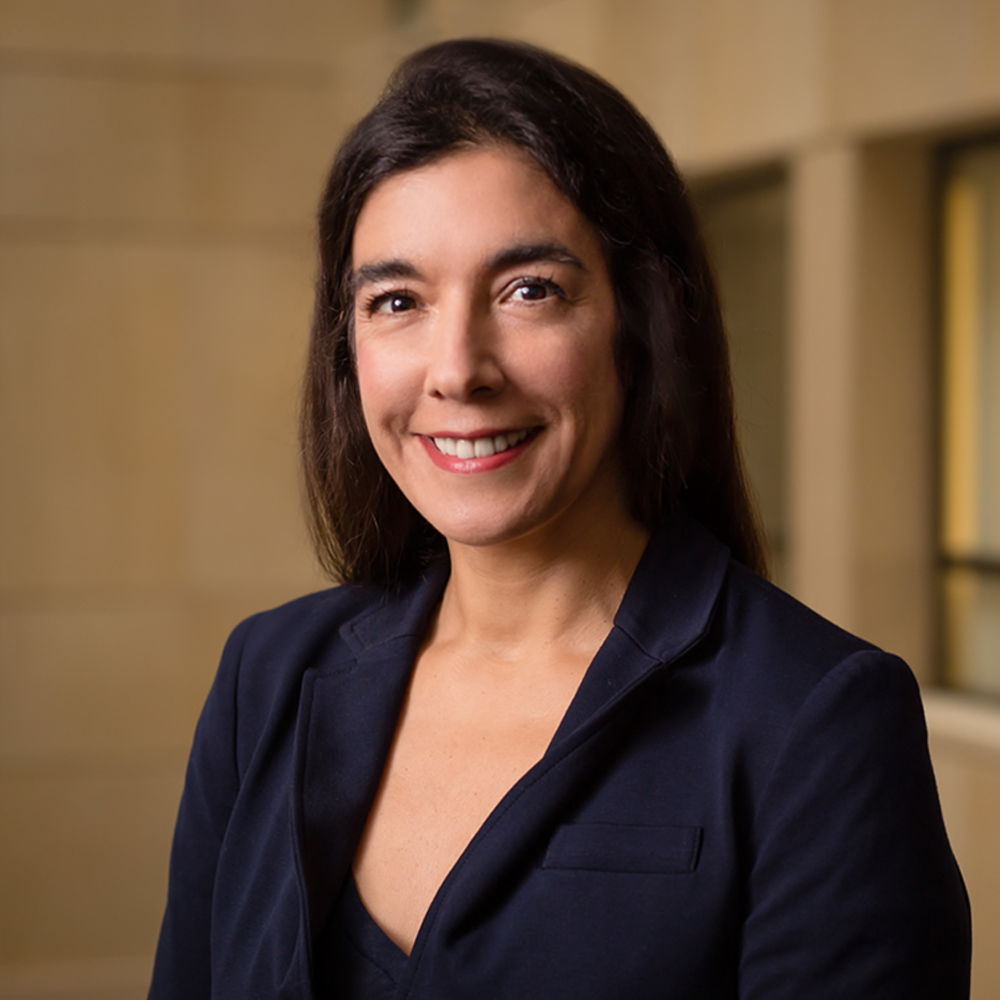
Dolores Albarracín is a professor of Psychology and Business at the University of Illinois Urbana-Champaign, and former Martin Fishbein Professor of Communication at the University of Pennsylvania.
Abstract: This talk will discuss how we think and communicate about action, as well as the implications of these processes for behavioral enactment. I will review three domains of findings from my research on action and inaction: (a) judgment, (b) communication, and (c) choice architecture. With respect to judgments, across countries, especially Western ones, action is perceived as more beneficial and desirable than inaction. Action is also considered to be more goal-directed than inaction, and systematically shifting the goal-directed or intentional nature of actions and inactions modifies evaluations. In the area of communication, actionable messages are more efficacious than non-actionable ones. For example, active, behavioral-skills messages in the health domain change behavior more than behavior-irrelevant, passive messages. One apparent exception to the advantage of active messages occurs in the area of choice architecture. A common finding is that allowing passive consent (active opt-out to avoid being an organ donor) produces more compliance than requiring active opt-in. However, I will show when active choice increases compliance with target policies.
About the Speaker
Dolores Albarracín is the Amy Gutmann Penn Integrates Knowledge (PIK) University Professor, the Walter and Leonore Annenberg Director of the Annenberg Public Policy Center, and director of the center’s Communication Science division. A social psychologist, Albarracín studies the impact of communication and persuasion on human behavior and the formation of beliefs, attitudes, and goals, particularly those that are socially beneficial. Born in Argentina, Albarracín received her Ph.D. in Psychology from the University of Illinois at Urbana-Champaign in 1997 and has been a tenured professor at the University of Florida and at the University of Illinois at Urbana-Champaign. Albarracín is a fellow of the American Academy of Arts and Sciences, the American Academy of Political and Social Science, and the American Association for the Advancement of Science. She is also a fellow of the Society for Personality and Social Psychology (SPSP), the American Psychological Association (APA), the Association for Psychological Science, and the Society of Experimental Social Psychology. Her research was recognized in 2018 with the SPSP’s inaugural Award for Outstanding Scientific Contributions to Research on Attitudes and Social Influence. Albarracín also received the 2020 Diener Award for Outstanding Mid-Career Contributions in Social Psychology and the 2025 Career Contribution Award from the SPSP. In 2025, along with four other social psychologists, she was honored with the BBVA Foundation’s Frontiers of Knowledge Award in Social Sciences for research increasing “our understanding of how attitudes can be changed, particularly with regard to persuasive messages.”Albarracín has published about 250 journal articles and book chapters in scientific outlets, including leading outlets in psychology, health, and science, and has had an important impact on national health communication policy. Her research is an unusual combination of basic and applied psychology. She has been elected President of the Society for Personality and Social Psychology and was Editor-in-Chief of Psychological Bulletin from 2014 to 2020. She is currently Editor-in-Chief of the Journal of Personality and Social Psychology: Attitudes and Social Cognition.