The Annenberg Public Policy Center has released two Science Media Monitor reports on how the media cover ethical questions on gene editing, and scientific retractions.

The Annenberg Public Policy Center has released two Science Media Monitor reports on how the media cover ethical questions on gene editing, and scientific retractions.

Experiencing extreme weather is not enough to convince climate change skeptics that humans are damaging the environment, according to a new study based on APPC research.
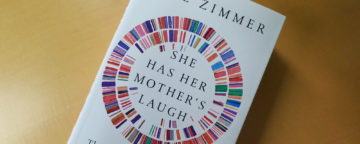
Carl Zimmer, columnist for The New York Times and author of 13 books about science, spoke about his new book, "She Has Her Mother’s Laugh: The Powers, Perversions, and Potential of Heredity."

A study of media coverage of the 2016 Zika virus outbreak found that while stories focused more heavily on certain risk aspects than others, it was the volume of Zika news coverage that increased public familiarity.

Public sentiment on GMOs shifted following the release of a consensus report by the National Academies of Sciences, Engineering, and Medicine, a study finds.

Postdoctoral fellow Matt Motta was honored with the Elsevier Atlas award for an article on overconfidence due to ignorance and anti-vaccine attitudes.

APPC has launched the Annenberg Science Media Monitor to analyze the content of news reporting on science. The first report focuses on coverage of scientific discovery.

Social and news media have different associations with risk perceptions and preventive behavior in an emerging health threat such as Zika, according to new research.