-
Low Message Sensation Health Promotion Videos Are Better Remembered and Activate Areas of the Brain Associated with Memory Encoding
Greater sensory stimulation in advertising has been postulated to facilitate attention and persuasion. For this reason, video ads promoting health behaviors are often designed to be high in “message sensation value” (MSV), a standardized measure of sensory intensity of the audiovisual and content features of an ad. However, our previous functional Magnetic Resonance Imaging (fMRI) study showed that low MSV ads were better remembered and produced more prefrontal and temporal and less occipital cortex activation, suggesting that high MSV may divert cognitive resources from processing ad content.
-
Annenberg Public Policy Center to study the Science of Science Communication
To mark its 20th anniversary, the Annenberg Public Policy Center of the University of Pennsylvania is opening a new area of study, the Science of Science Communication, to investigate how scientific evidence can be more effectively conveyed to the public. APPC also announced that FactCheck.org, which has focused on political speech, has received funding from the Stanton Foundation to expand its mission to include monitoring the use and misuse of scientific evidence.

-
Overcoming the Effects of Selectively Presented Scientific Information in Partisan Media
Scientists can minimize the likelihood that their message will be rejected in a politically polarized environment by avoiding advocacy, relying on trusted sources, and inviting the audience to understand the evidence that justifies the scientific conclusion, according to a new study by Annenberg Public Policy Center researchers published in the Proceedings of the National Academy of Sciences. It showed that conservatives were able to draw the correct inferences about the downward trend in the Arctic sea ice despite exposure to a misleading Fox News report.

-
Perceived Difficulty of Performing Selected HIV/AIDS Preventive Behaviors and Life Satisfaction: Is There a Relationship for African American Adolescents?
Research on the relationship between adolescent health risk behaviors, sexual risk behaviors in particular, and perceived life satisfaction is emerging. Some researchers suggest that life satisfaction has been a neglected component of adolescent health research.
-
Leveraging scientific credibility about Arctic sea ice trends in a polarized political environment – Supplement to PNAS
This work argues that, in a polarized environment, scientists can minimize the likelihood that the audience’s biased processing will lead to rejection of their message if they not only eschew advocacy but also, convey that they are sharers of knowledge faithful to science’s way of knowing and respectful of the audience’s intelligence; the sources on which they rely are well-regarded by both conservatives and liberals; and the message explains how the scientist arrived at the offered conclusion, is conveyed in a visual form that involves the audience in drawing its own conclusions, and capsulizes key inferences in an illustrative analogy.
-
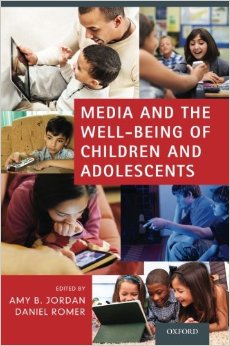
Media and the Well-Being of Children and Adolescents
Media and the Well-Being of Children and Adolescents brings together many of the field's most important scholars and media professionals to present cutting-edge theory and empirical research on both the benefits and risks to youth development. It examines the role that media play in the every-day lives of young people and their families, and considers both traditional media such as television and movies as well as "new" digital media, such as video games, cell phones, and the Internet.
-
Cultivation Theory: Its History, Current Status, and Future Directions
Cultivation theory, in late 1960s, rested on the recognition that industrialized mass-mediated storytelling, most clearly exemplified by television (TV) programming, the dominant entertainment medium of American culture. This chapter briefly describes cultivation theory, the ways it has been challenged, and how its role can be understood and further evaluated in our rapidly changing media environment.

-
HIV-Related Stigma Among African-American Youth in the Northeast and Southeast U.S.
HIV-related stigma inhibits optimal HIV prevention and treatment among African-Americans. Addressing HIV/AIDS in high prevalence locales should include efforts to reduce HIV-related stigma.
-
Kathleen Hall Jamieson Delivers Sackler Keynote on Science Communication
What are the roles of scientists and journalists as “custodians of the knowable” and what happens when they get it wrong? How do they insulate themselves from charges of ineptness or partisanship?…

-
Computer Access and Internet Use Among Urban Youths
This report presents data on computer access, Internet use, and factors associated with health information seeking on the Internet among a sample of youths aged 15 to 30 years in New York City.