Publications
-
Editorial: Adolescent storm and stress: a 21st century evaluation
Introduction Adolescence, a period covering ~10–18 years of age, has long been characterized as a time of “storm and stress”. The characterization entered psychology from research on adolescent development done by Hall…

-
Media influences on children and advice for parents to reduce harmful exposure to firearm violence in media
Key points Firearm violence is a major concern for young people today, with a recent poll showing greater concern for gun violence (51%) than for abortion (47%) or climate change (37%). Young…
-
If Your Adolescent Has Bipolar Disorder: An Essential Resource for Parents
The authoritative guide to understanding and helping a teenager with bipolar disorder. While coping with teenage moodiness can be difficult under any circumstances, it can be especially challenging if a teenager has…
-
If Your Adolescent Has Depression: An Essential Resource for Parents
The authoritative guide to understanding and helping a teenager with depression. While coping with teenage moodiness can be difficult under any circumstances, it can be especially challenging if a teenager has a…
-
How people use information about changes in infections and disease prevalence
Abstract Objective: To determine the influence of two representative metrics of epidemiological risk, changes in new infections, and disease prevalence, on people’s risk judgments and disease-prevention behaviors. Method: Four experiments were conducted…
-
Mediated Violence: An Historical and Contemporary Review
Abstract We review the history of violence as transmitted through media with particular attention to firearms. We take a broad perspective on the role of media and how the human brain has…
-
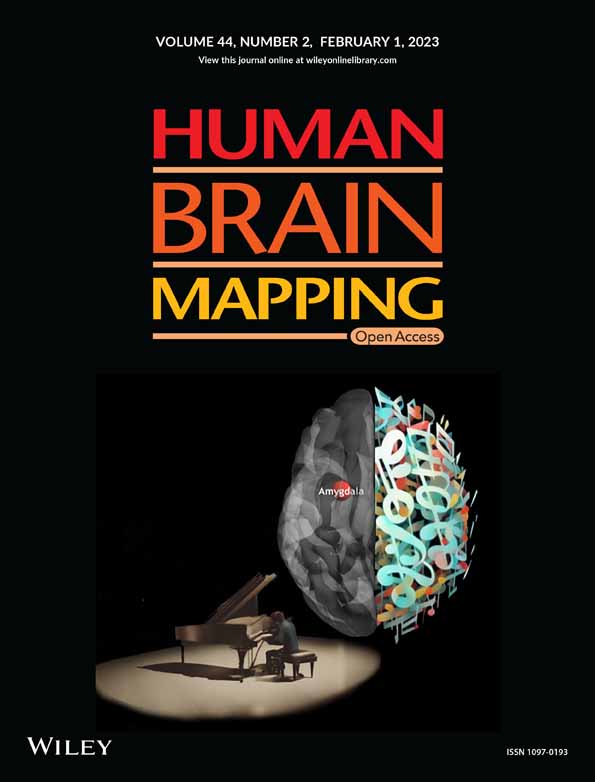
An event-based magnetoencephalography study of simulated driving: Establishing a novel paradigm to probe the dynamic interplay of executive and motor function
Magnetoencephalography (MEG) is particularly well-suited to the study of human motor cortex oscillatory rhythms and motor control. However, the motor tasks studied to date are largely overly simplistic. This study describes a…
-
Seasonal suicide trends in adolescents in the US: Did they explain the apparent effect of the Netflix show 13 Reasons Why?
Introduction Controversy surrounds the effects of the first season of the Netflix show 13 Reasons Why on adolescent suicide in the United States. This research reexamined the question using more sensitive weekly suicide counts…
-
Adolescents’ own views on their risk behaviors, and the potential effects of being labeled as risk-takers: A commentary and review
Adolescents are stereotypically viewed as risk-takers (“stereotypical risk-takers”) in science, mainstream media, fictional literature and in everyday life. However, increasing research suggests that adolescents do not always engage in “heightened” risk-taking, and…
-
Conspiratorial thinking as a precursor to opposition to COVID-19 vaccination in the US: a multi-year study from 2018 to 2021
Despite widespread availability of safe and effective COVID-19 vaccines in the US, only about 66% of the eligible US population had taken the recommended initial doses of the COVID-19 vaccines as of…